

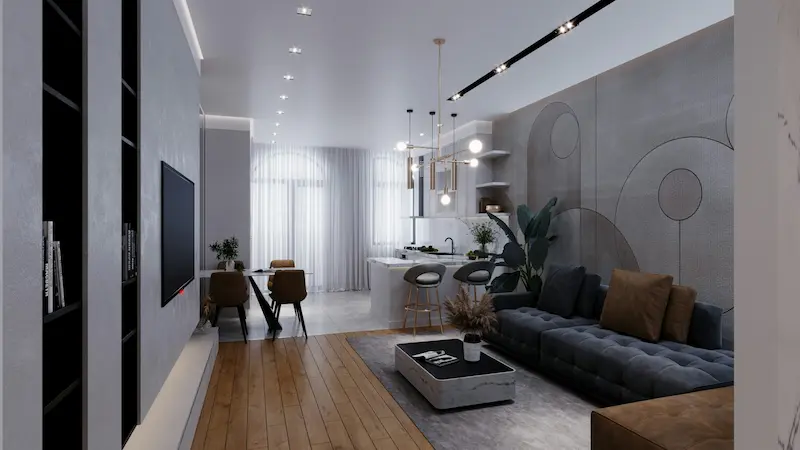
Home Remodeling/Renovation: Fix Common Design Mistakes
Introduction: Embracing the “Renovation Rescue”
Home Remodeling/Renovation projects are often exciting and full of grand ideas for homeowners to envision their amazing updated space will look and function once the renovation is complete, so they spend weeks or even months planning every little detail.
After the tools are put away and the dust has settled from the renovation, an unexpected occurrence may happen to many people in the form of renovation regret.
Whether it is because the lighting does not seem to be as soft as you originally thought it would be, the paint color ended up being different than you thought it would be or the layout does not function smoothly like you originally imagined, it can be quite frustrating to have these types of issues occur after spending a tremendous amount of money and time doing your remodel or renovation.
However, renovation regret happens regularly. Even most professional designers will tell you that a space usually needs to be altered somewhat after all of the renovation has been done to it.
In most cases, though, it does not mean that everything will have to be taken out and started over in order to correct these types of issues.
Many designers have recommended a way to resolve these problems in the renovation process by a method called, “Renovation Rescue”. The philosophy of the Renovation Rescue method is simple: most renovation problems can be resolved without having to re-do the whole project. Instead, by making strategic and small design adjustments will usually resolve most renovation issues.
Once the correct renovations to the renovation process are made, the finished product will be just as beautiful, functional and relaxed as originally envisioned.
Solving Lighting Failures (The “Big Light” Problem)
Homeowners frequently don’t like the lighting in their houses due to their lighting choices when they completed a Home Remodeling/Renovation project. Since lighting is essential in how well a space feels .
Many homes have one central light source, also known as the “big light” A central light source alone typically doesn’t create the warm, inviting feel people want for their homes.
The Designer Fixes
Layering Light Sources

Good designers don’t use just one lighting source. Typically, they use several different sources of light to add warmth, depth, and comfort to the space.
If your Home Remodeling/Renovation had poor lighting, consider augmenting it by adding:
- Floor lamps in corners
- Table lamps beside seating areas
- Wall sconces for subtle ambient lighting
- Accent lights for shelves or artwork
By layering these light sources, the space becomes softer and more inviting without requiring major electrical work.
Control and Atmosphere
The installation of dimmer switches is another easy way to solve this problem.
With dimmers, you have the flexibility to adjust the intensity of light to fit your desired level based on the time of day or activity. For example, you could use brighter lights during the day for tasks like working or cleaning, and use softer lighting for relaxation in the evenings.
This minor improvement can greatly enhance the overall mood of the Home Remodeling/Renovation.
Rectifying Paint and Color Missteps

The second most common type of buyer’s remorse after completing a Home Remodeling/Renovation project is related to the paint color. The paint you selected as being beautiful on a sample card may look different when applied to an entire room because it has been applied in much larger volumes than anticipated.
And in some cases, the dark paint appears too dark, or the bright paint appears too bright, and/or the undertones appear differently than you expected because of the amount of natural light in the space.
If you experience any of these issues and want to avoid having to repaint the entire area, you may be able to use some creative design solutions to help fix the problem before the work has begun.
The Designer Fixes
Adjusting Lighting Temperature
Lighting has a significant effect on how paint colors appear. Light bulbs come in different Kelvin ratings, which influence whether the light looks warm, neutral, or cool.
For example:
- Warm lighting (2700K–3000K) creates yellow undertones
- Neutral lighting (3500K–4100K) balances colors
- Cool lighting (5000K+) introduces blue tones
If your paint color looks slightly off after your Home Remodeling/Renovation, simply switching the light bulbs can neutralize the color and make it feel more balanced.
Breaking Up the Color
If the color still feels too strong, you can visually reduce its impact.
Large mirrors, wall art, or decorative panels can break up large sections of painted walls. Mirrors are particularly effective because they reflect light and make a room feel larger.
This simple design trick allows you to keep the paint color from your Home Remodeling/Renovation while softening its visual intensity.
Addressing Layout and “Flow” Regrets
Another frequent concern following an Home Renovation/Remodeling project is that your new layout may not appear as functional as you anticipated.
Rooms can also feel small and/or awkward to flow about in. Most of the time though, the issue isn’t so much structural as much as it is furniture scaling and arrangement.
The Designer Fixes
Correcting Furniture Scale

For example, if large and bulky furniture was used in your room, the room may seem crowded even if it is very large.
To remedy this, designers often swap out heavy furniture for lighter weight furniture with visible legs. The way they do this is to have their couches/chairs/tables raised on four legs a couple inches above the floor. As a result of this, a larger percentage of the floor area will be seen and therefore will create the optical illusion of a larger size than there is actually.
So if your Home Renovation/Remodeling project resulted in you feeling cramped or closed-off in one of your rooms, and you simply swap out one oversized piece of furniture from the original configuration, you may be able to create enough space for yourself and for your guests to get through and experience your newly remodeled space just as you intended!
Defining Zones

Open concept kitchens are very popular today in Home Remodeling/Renovation projects; many times they have an open concept without clearly defined areas for activities. One way to help create visual division is to use area rugs, for example an area rug can be used to define a seating area, reading area, or a dining area. Using area rugs helps create an organic visual flow through a space, making the layout appear more obvious to the occupants.
Fixing Inadequate Storage Solutions

Another area of Home Remodeling/Renovation that people often regret once completed, is not having enough storage in their home after it was remodeled. When storage is not taken into consideration during the Home Renovation, clutter builds up quite quickly. Luckily there are several practical ways to improve storage without having to do another major renovation.
The Designer Fixes
Vertical Optimization
Many homes have several feet of free vertical space that could easily be turned into storage space.
Putting floating shelves or tall bookcases or built-in cabinets helps maximize storage capacity while keeping floor space free.
Vertical storage provides a solution for decluttering your home, and also creates an illusion that the room has high ceilings and plenty of space, after the Home Remodeling/Renovation has been completed.
Multifunctional Furniture

Furniture that serves more than one purpose is another smart storage solution.
Examples include:
- Storage ottomans
- Coffee tables with hidden compartments
- Beds with built-in drawers
- Benches with storage inside
These types of furniture are great for providing additional functionality without overwhelming the total amount of floor space, which is especially beneficial in small homes where the homeowner wishes to complete Home Improvement/Renovation projects.
Conclusion: Reclaiming Your Space
Many homeowners become frustrated after their Home Remodeling/Renovation projects because of the way they were completed. But that does not mean that the Home Improvement/Renovation project did not accomplish what they set out to do.
In many instances, just a couple different design elements can completely change how a room looks and functions.
Lighting improvements, the scale of furniture, defining distinct functional zones within the room itself and utilizing improved storage options can solve numerous renovation errors without major construction.
The most important part of the process is to remember that design is an ongoing and continuous process. After making a couple incremental changes to your Home Improvement/Renovation project, your room’s original function and daily comfort level can be restored to what was envisioned at the time of the project.
In addition, sometimes those minor edits can take an unhappy renovation project and provide a true Renovation Rescue.